.NET 11 Preview - Moving StringBuilder Content With MoveChunks
[C#, .NET, .NET 11 Preview]
One of the data structures that a developer will quickly add to their tool-belt is the StringBuilder.
Creating and allocating a string is an expensive process, especially if done repeatedly.
Code such as this is problematic:
var str = "";
for (var i = 1; i < 10_000; i++)
{
  str += $"{i} ";
}
Console.WriteLine(str);
This code actually created and allocates 10,000 intermediary string objects, which is wasteful.
The way around this is to use the StringBuilder as follows;
StringBuilder sb = new();
for (var i = 1; i < 10_000; i++)
{
  sb.Append($"{i} ");
}
Console.WriteLine(sb.ToString());
An increasingly common use case is when you need to move data from one StringBuilder other.
Typically, you would do this:
var target = new StringBuilder(sb.ToString());
This is generally fine, but you can run into problems when you have very large StringBuilders, as when you are done you will have two very large StringBuilders occupying memory.
In .NET 11 a new static method has been introduced to the StringBuilder to address this scenario - MoveChunks.
It works as follows:
var target = StringBuilder.MoveChunks(sb);
What this will do is move the content from the source, sb to the target, target.
After the operation is done the source will be empty.
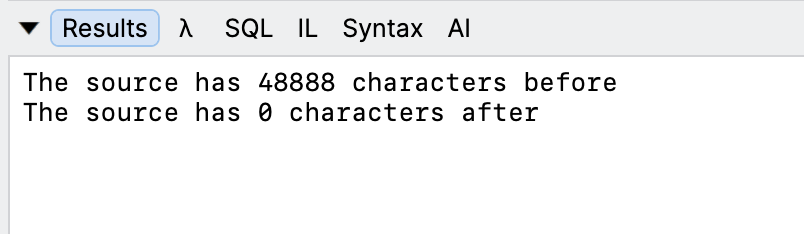
Console.WriteLine($"The source has {sb.Length} characters before");
var target = StringBuilder.MoveChunks(sb);
Console.WriteLine($"The source has {sb.Length} characters after");
This code will return the following:
TLDR
The MoveChunks method allows you to move contents from one StringBuilder to another.
The code is in my GitHub.
Happy Hacking!