What Happens When You Delete A Non-Existent File In Java
[Java]
In yesterday’s post, “What Happens When You Do File.Delete For A Non-Existent File In C# & .NET”, we looked at the intriguing fact that in .NET trying to delete a file that does not exist will not throw an exception.
I wondered if the same was true for Java.
This is a one liner that is meant to delete a file that I know for a fact does not exist.
void main() throws IOException {
   Files.delete(Path.of("/Users/rad/Downloads/NoSuchFile.txt"));
}
Here I am using the NIO package as opposed to the traditional java.io package.
Running this yields the following:
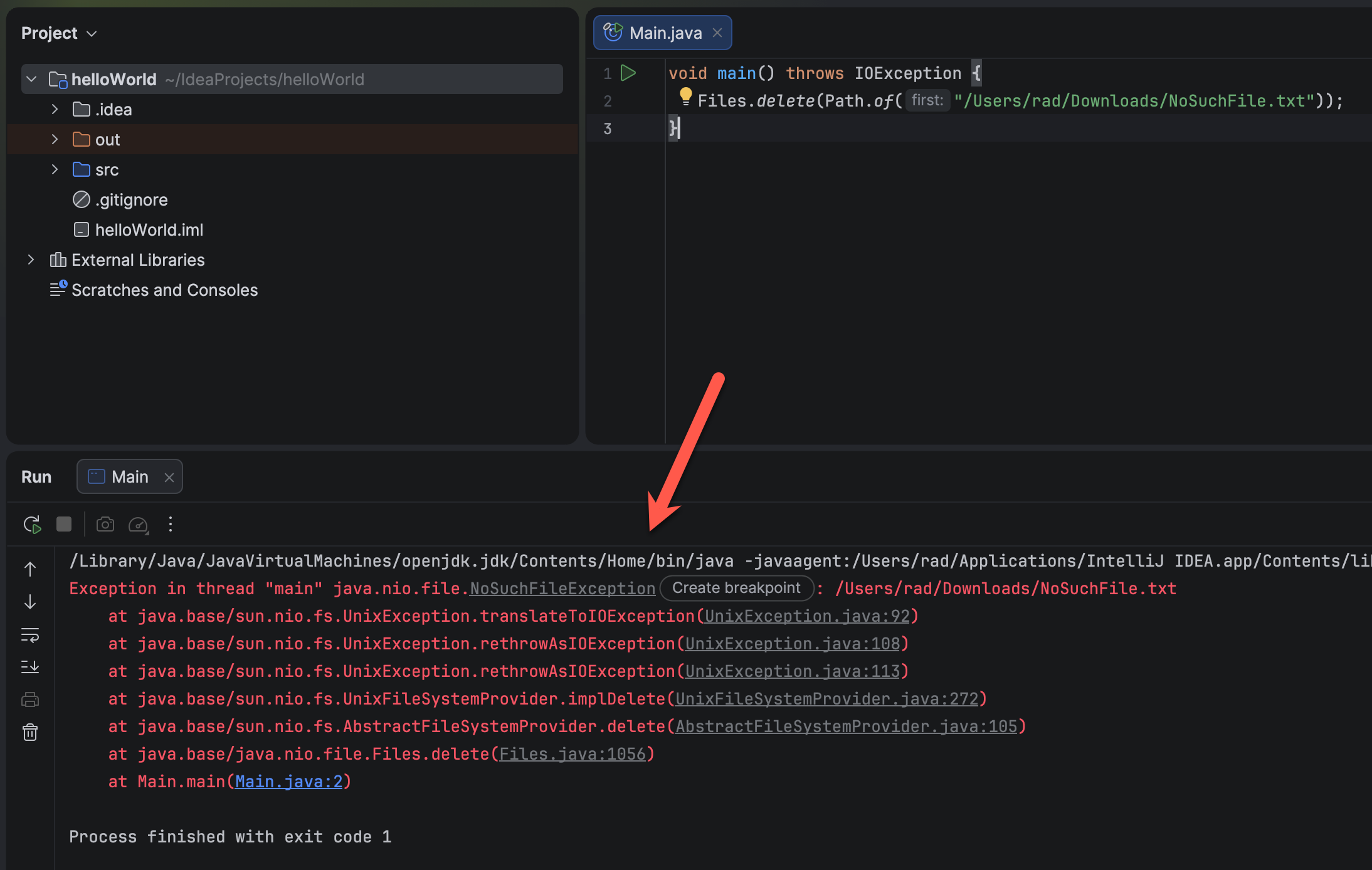
So in Java, this is in fact an exception!
But Java has an interesting alternative API - deleteIfExists.
You’d use it like so:
void main() throws IOException {
    var success = Files.deleteIfExists(Path.of("/Users/rad/Downloads/NoSuchFile.txt"));
    System.out.printf("Success? %b", success);
}
There are no surprises when you run this code:
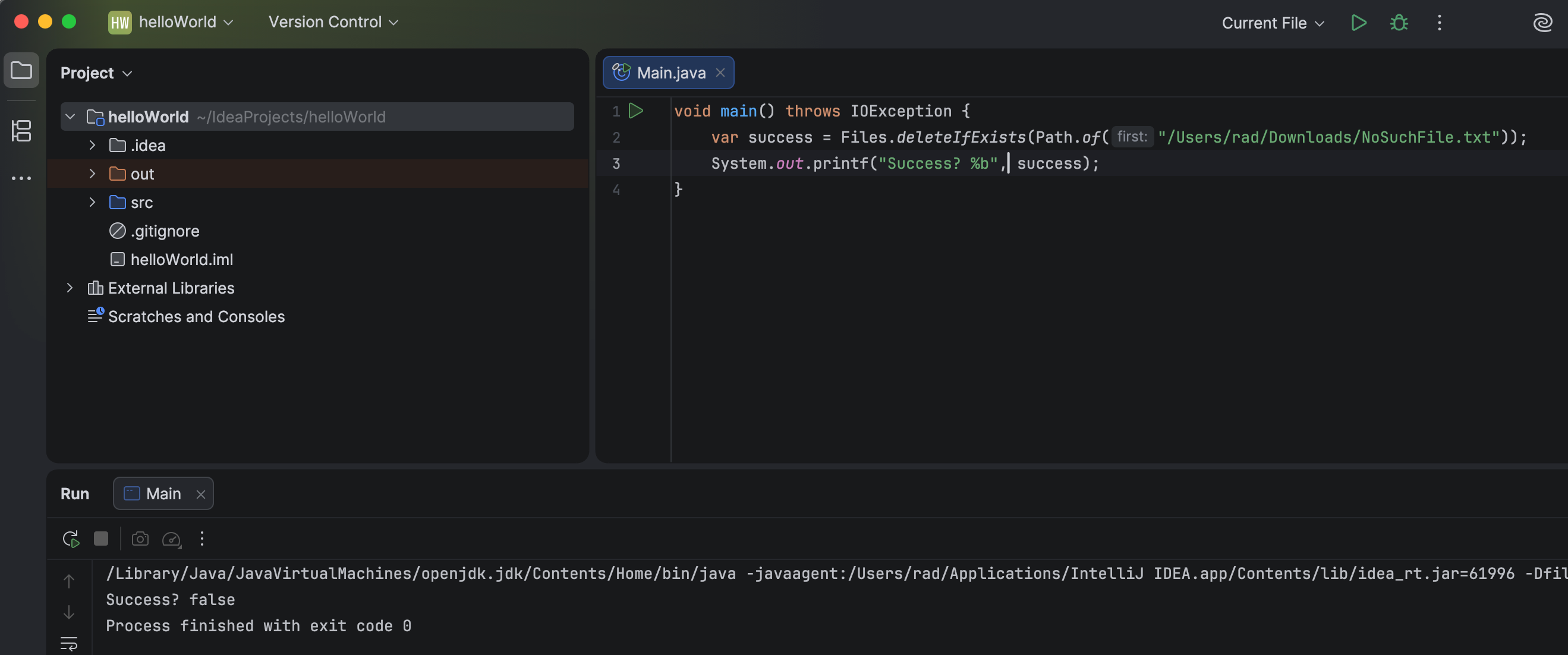
I understand the rationale behind both existing. It boils down to a single expection - do you expect the file you want to delete to exist? If so, then you might want a signal that it doesn’t. In which case an exception is appropriate. Otherwise, silence is golden.
TLDR
Java NIO has two file deletion APIs you can call depending on your needs - delete and deleteIfExists
Happy hacking!